
BuildingRating.org is a hub for global activity in building energy rating and disclosure policy. Learn how energy rating works, compare local policies, and gain access to the resources you need to understand how rating and disclosure affects you. How can this site help you?
Policy Brief: State of California
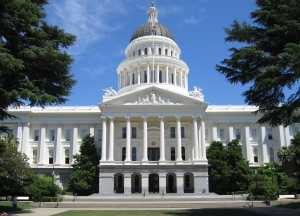
The state of California passed Assembly Bill 1103 in October 2007. The law requires benchmarking and disclosure for nonresidential buildings involved in a financial transaction, and includes requirements on utilities to help owners by uploading energy consumption data.
The commercial building benchmarking law was complemented by several other executive mandates. Assembly Bill 531, enacted in 2009, allowed the California Energy Commission (CEC) to develop a new compliance schedule for AB 1103. Subsequently, AB 758 called for the development of a statewide effort to reduce energy consumption in existing buildings, including a California-specific building performance rating and labeling program. The state-wide program compliments an annual benchmarking policy for commercial buildings in San Francisco.
Key Provisions
AB 1103 requires owners of nonresidential buildings over 5,000 SF to rate their buildings using Energy Star software. They must disclose a Statement of Energy Performance to the California Energy Commission (CEC) as well as to prospective buyers, lessees or lenders prior to the closing of a transaction. Utilities are required, at the request of a building owner, to automatically upload energy consumption information for a building into Portfolio Manager software.
Although the law was scheduled to come into effect in 2009 for utilities and in 2010 for building owners, the benchmarking mandate was delayed until 2012. Final regulations were published in March 2012, with dates by which building owners must submit energy performance to the CEC. These deadlines have been delayed several times. The most recent posting of dates, published on 08/14/2013, lists the enforcement deadliness as follows:
- January 1, 2014 for bulidings 10,000 and larger
- July 1, 2014 for buildings 5,000 to 9,999 SF
AB 1103 does not apply to multifamily buildings or the partial sale, lease or financing of nonresidential buildings. The Statement of Energy Performance is valid for 120 days following its generation. If a building owner makes a subsequent disclosure outside of this time period, they must re-benchmark the building and generate a new Statement of Energy Performance.
Document Library:
See our full list of California-related documents
Legislation/Regulation:
AB1103 Proposed Regulations (March 2012)
Other rulemaking documents (California Energy Commission's AB1103 page)
AB 1103 (2009 version)
AB 1103 (2007 version)
Additional Documents: